
More Value Before the Shredder: What the EU’s New Vehicle Circularity Rules Mean for Recyclers
August 12, 2026
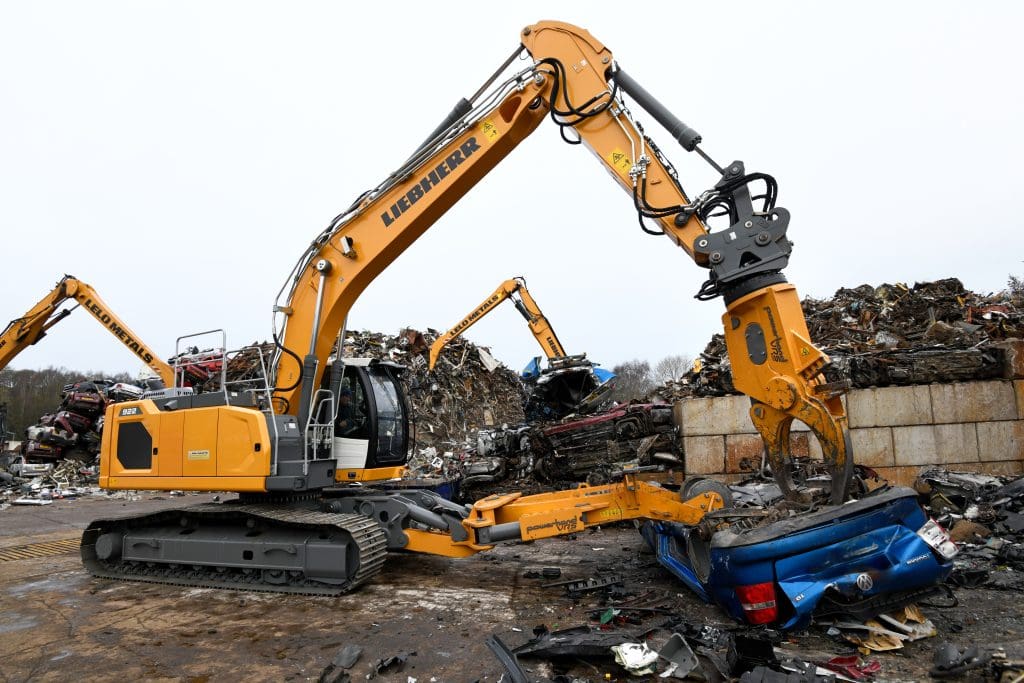
The EU’s new vehicle circularity rules put an interesting question in front of the recycling industry: if more of tomorrow’s vehicles are going to be made using material recovered from yesterday’s vehicles, what needs to happen before the shell reaches the shredder?
In June 2026, the EU formally adopted new rules covering the lifecycle of vehicles from design and production through to end-of-life treatment. The aim is to increase reuse, recycling and material recovery across the automotive sector.
For vehicle recyclers, one part of the regulation is particularly relevant: the growing emphasis on recovering cleaner, higher-quality material from end-of-life vehicles.
More recycled material going back into new vehicles
Under the new rules, at least 15% of the plastic used in new vehicle types will need to come from recycled material six years after the regulation enters into force. That target rises to 25% after ten years.
Importantly, at least 20% of that recycled-plastic requirement must come from material recovered from end-of-life vehicles or used vehicle parts, creating a closed-loop route from old vehicles back into new ones.
That puts the dismantling stage firmly into focus.
If more automotive material is expected to make its way back into new vehicles, it needs to be recovered in a form that makes further separation, processing and recycling worthwhile.
The European Commission has already highlighted insufficient material separation, low plastics recycling rates and lower-quality scrap steel as weaknesses in the existing end-of-life vehicle system. Its wider ambition is to increase the volume of materials recovered at a higher quality, including plastics, steel, aluminium, copper and critical raw materials.
The new regulation also provides a route for future recycled-content requirements for materials including steel, aluminium, magnesium and critical raw materials following further feasibility work.
For recyclers, that makes what happens before shredding increasingly important.
The value is in what you separate first
Processing speed will always matter in a vehicle recycling yard. But speed and value recovery do not have to work against each other.
Copper wiring, engines, transmissions, axle and suspension components and other higher-grade materials can carry considerably more value when they are deliberately removed from the lower-value vehicle body rather than left within the shell. Powerhand’s VRS systems have been developed specifically around that process, using a dexterity grapple and clamp system to hold the vehicle while valuable materials are removed from the cab.
Copper wiring is a good example.
Rather than sending the wiring loom through the shredder with the rest of the vehicle, the narrow jaw profile and visibility of the VRS grapple allow the operator to reach into the vehicle and pull the loom out separately.
The same principle applies to engines, transmissions, axles and suspension components.
It’s not about dismantling every vehicle down to the last component. It’s about identifying where recoverable value exists and removing it in a timeframe that still makes commercial sense.
That becomes particularly interesting when the wider automotive industry is being asked to recover more material and put more of it back into production.
Vehicles themselves will become easier to dismantle
The new rules are not aimed only at what happens once a vehicle reaches the recycling yard.
Manufacturers will also be required to design new vehicles so that as many parts and components as possible can be removed more easily at the end of the vehicle’s life.
That creates an interesting alignment between vehicle design and the equipment being used to dismantle them.
If future vehicles are designed with greater consideration for component removal and material recovery, recyclers need the processes and machinery to take advantage of it.
Better access to components means little if valuable material still ends up mixed together further down the recycling process.
Greater focus on where end-of-life vehicles go
Traceability is another major part of the regulation.
The European Commission estimates that around 3.5 million vehicles currently disappear from EU roads each year without being properly accounted for, including vehicles exported or disposed of outside authorised routes. The new rules strengthen vehicle traceability and controls around the export of vehicles that are no longer roadworthy.
More end-of-life vehicles moving through authorised treatment channels should, in turn, create more opportunity for properly managed dismantling, reuse and material recovery.
Where the Powerhand VRS fits
At Powerhand, the thinking behind the VRS has always been simple: recover the value before the vehicle becomes scrap.
The system combines clamp legs that secure the vehicle with a dexterity grapple designed to reach into difficult areas and selectively remove components and materials. Across the VRS range, different systems are available to suit different machine sizes and yard requirements.
On the VRS200, for example, the system can be used to remove wiring looms, axle and suspension components and engine and transmission assemblies, while the integrated grapple shear and processing blades provide additional options for separating material during dismantling.
The EU’s new regulation does not change vehicle recycling overnight. The targets are deliberately phased over a number of years.
What it does do is reinforce a direction already visible across the industry: more attention on what can be recovered from an end-of-life vehicle, how cleanly it can be separated and how much of that material can go back into productive use.
For vehicle recyclers, there is a commercial opportunity within that.
Before a vehicle becomes a tonne of mixed scrap, it contains a range of different materials, components and values.
The more of that value that can be recovered first, the more there is to be gained from every vehicle entering the yard.